Eng. Moshe Broner
Some of the waste we produce, animals’ husbandry, domestic and industrial organic wastes and other organic materials can be a source of income and a mean for environmental protection, by utilizing it for compost production.
Producing compost, using intensive process of open windrows method, increases the compost quality and shortens the production time by 50-60% comparing to other known methods.
Challenges
- Intensive modern agriculture produces large quantities of solid and liquid byproducts, often considered as waste with no known beneficial utilization. However, such waste still needs to be transported and handled, increasing carbon footprint and loading the production costs. Animal husbandry creates large quantities of manure and wastewater, currently considered as environmental hazard.
- Our offered solution uses animals’ waste as a base material in the process of composting. Thus, we are able to solve two problems: reducing waste and producing high quality compost that may be used for soil rehabilitation, agricultural and landscape applications, while reducing the usage of chemical fertilizers.

Technology
Producing compost, using open windrows method.
The process is very intensive and based on watering and turning the windrows frequently.
The production process is fully monitored and controlled by daily basis.
Organic materials are utilized as raw materials while the ratio of the materials and the production process will affect the characteristics of the final product.
The intensive process increases the compost quality and shortens the production duration by 50-60% comparing to other known methods.
Unique Features and Benefits
This composting process is a scientific development of leading Israeli researchers and was adapted by Farmentor’s experts for commercial production and use.
The intensive and controlled process increases the product quality, higher Organic Matter (OM) and Nitrogen (N) content by 30-50%, decreases the production and handling cost, and shortens the production duration by 50-60%.
The technology is completely applicable and valid.
It was applied in various conditions worldwide (raw materials, climate conditions)
An application was developed and deployed globally and is available for data collection and remote follow up, if needed.
Requirements
- Given a skilled team, the potential of production is un limited.
- Equipment: Front loader and compost turner
- Infrastructures: Roofed area (according to climate conditions)
- Water source: Any regular water source. The farm’s wastewater may be used as watering source and minimize environmental pollution.
- Animal manures and other organic materials
Evaluation of compost quality and process efficiency
1. Quality parameters:
a. Lab analysis: OM (organic matter) content, Nutrients (especially Nitrogen) and more
b. Not attractive to animals (inc. flies)
c. Odorless
2. Short production duration
3. Cost effectiveness
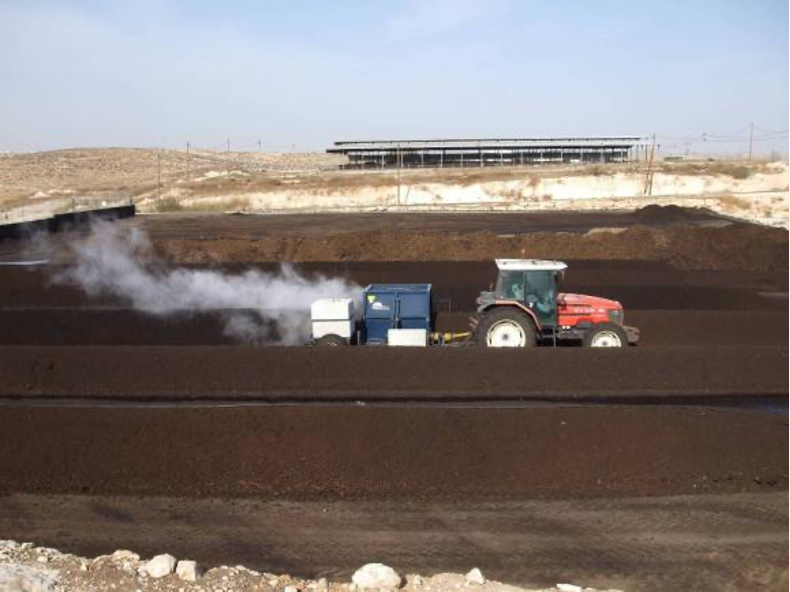
Dairy farm, Israel
Up to 12,000 m3 / year Small turner, tractor propelled

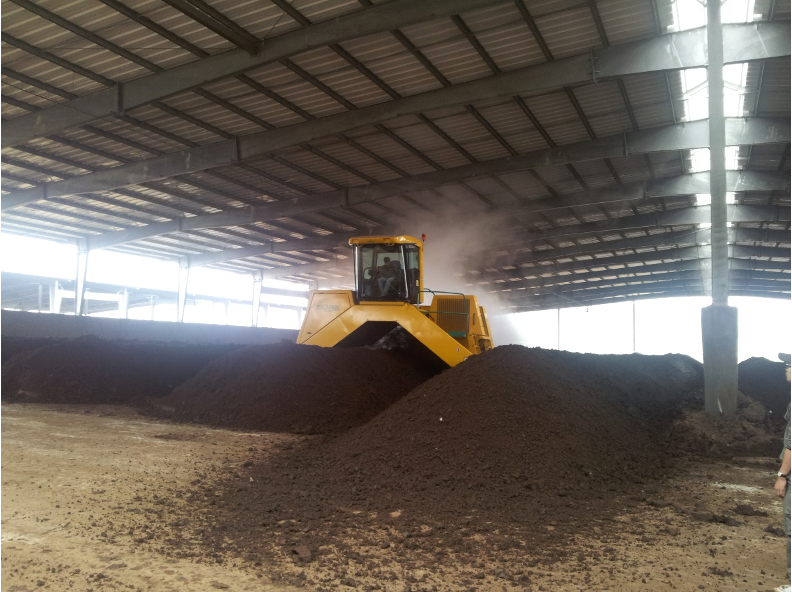
Huge dairy farm, Vietnam
Up to 150,000 m3 / year. Big self turner

Small scale, cacao plantation, Philippines
Up to 200 m3 / year


Experimental Scale, Vegetables, Cameroon
